

Why Relationships Change Over Time
What Happened to the Person I Used to Know?
Book Giveaway!
Join the fun! We’re giving away free copies of our favorite behavioral science books from this episode, but the only way to enter is by joining the Behavioral Grooves Facebook community. Throughout the next few months, we’ll be randomly selecting winners from the comments. It’s also where we share extra insights, questions, and behind-the-scenes thinking from the show. Join the group, jump into the conversation, and you could end up with your next great read.
This Week’s Music for Grooving
Check out some of the recommendations from this week’s episode.
Gotye - Somebody That I Used to Know
Flora Cash - You’re Somebody Else
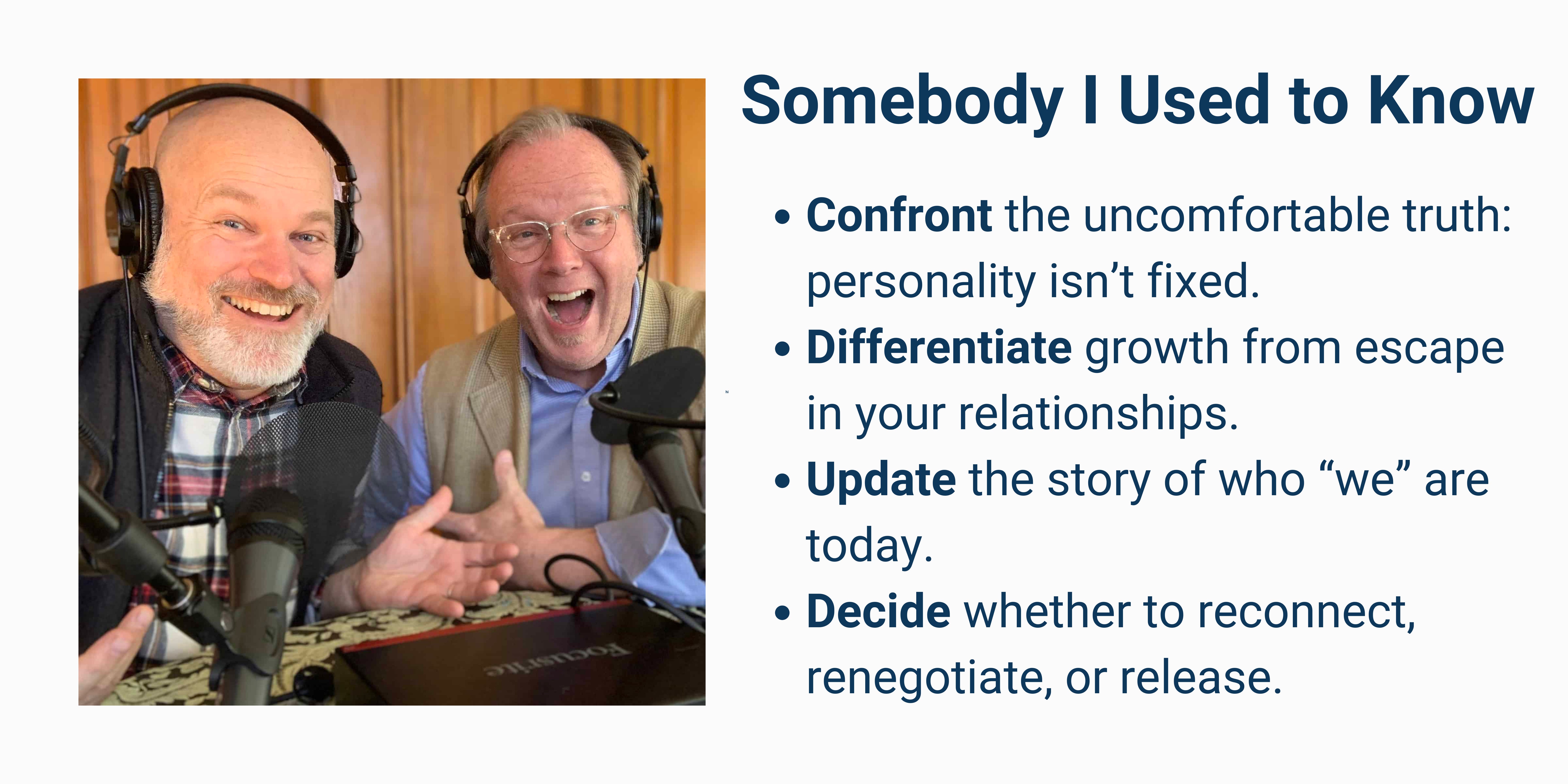
Long-term relationships aren’t static
they evolve. And sometimes that evolution feels less like growth and more like loss. This week, we take the mic sans guest to explore the quiet but painful question that can surface in marriages, friendships, and even families: What happened to the person I knew?
When someone we love changes, whether through politics, spirituality, life experience, or subtle shifts that build over time, it can feel like betrayal, grief, or deep confusion. Behavioral science offers a way to make sense of it. Personality is not fixed. We all shift across time, and not always in the same direction as the people closest to us. Healthy relationships can grow together or drift apart. Drawing on research from recent conversations and past guests, we unpack what it means when our preferences, beliefs, identities, and lifestyles evolve, and how those changes reshape what feels important.
We will be honest. Not every relationship can or should be saved, especially when the shift feels fundamental to your values. This episode offers perspective and support for anyone grieving a friendship, wrestling with a partner’s emotional evolution, or wondering how they themselves have changed. Join us to pause, reflect, recalibrate, and decide what the next chapter of your life should look like, and who you want beside you in it.
Want to watch this episode? Check it out on our YouTube Channel
End of History Illusion
As human beings, we find it easier to accept the idea that we have changed in the past then consider the possibility that we will change in the future. Psychologists often refer to this at the end of history illusion. Research shows that no matter what age we’re at, we are usually able to recognize we’re different from who we were 10 years ago, but we assume that our current personality, values, and preferences are basically final. In layman’s terms, we tend to assume our growth story is complete, even as it’s still unfolding.
This bias helps explain why changes in relationships feel so destabilizing. We expect the same stability from others that we expect from ourselves, even when that’s unrealistic. The uncomfortable truth is, none of us are - or ever will be - a finished product.
How Much Will You Change In the Future?
In this quick Ted-Ed Animation, the concept of change is explored. How we change, when we change, and what the change means for our future. If you’ve got four minutes to explore a lifetime of change, tune in below.
Housekeeping
If you want to know more about today’s guest or this week’s grooving, check out the links below!
The All-or-Nothing Marriage: How the Best Marriages Work by Eli Finkel
And don’t forget to join the conversation with us in our Facebook Groove Community
This is so true. Each person grows so differently, depending on the life situations they react to. Thank you for this important article.