

Stop Feeling Guilty About Climate Change
What If We've Been Thinking About Climate Change All Wrong?
This Week’s Music for Grooving
Check out some of the recommendations from this week’s episode.
Taylor Swift - Look What You Made Me Do
Climate change conversations often start with sacrifice.
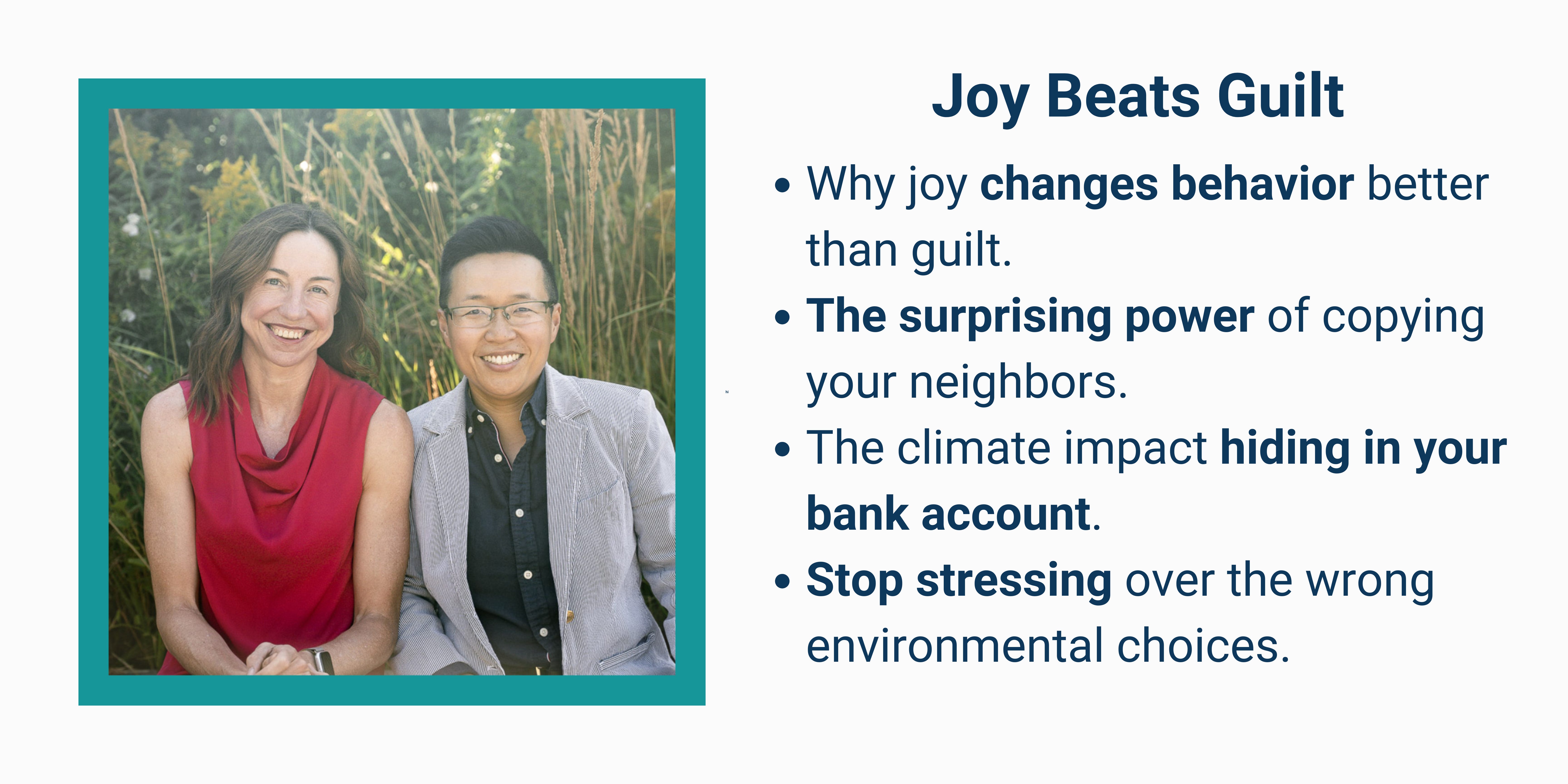
Liz Dunn and Jiaying Zhao argue there’s a better way. This week, we’re taking a happier look at a global problem with the authors of Leave the Lights On to explore why joy might be one of the most powerful climate solutions we have.
Is copying your neighbors more effective than reading another alarming climate report? Could our biggest environmental wins be surprisingly simple? Our conversation with Liz and JZ explores the intersection of behavioral science, happiness, and climate change to uncover which actions actually make a difference. We also discuss the power of social influence, scarcity, and the surprising impact of where we keep our money.
We’ve all felt overwhelmed by climate change and wondered whether our individual choices really matter. We hope this conversation offers a refreshing alternative. Instead of asking us to do more, Liz and JZ explain how smarter, happier decisions can create positive ripple effects for ourselves, our communities, and the planet.
Want to watch this episode? Check it out on our YouTube Channel
Remember our series on Robert Cialdini?
We hope so. It was just two weeks ago, and it highlighted one of the most powerful principles of influence, one that shows up again in this episode.
Remember the Opower study? People were more likely to reduce their energy use after seeing a simple graph comparing their energy consumption to that of their neighbors. That worked better than appeals to save the environment or even to save money. Why?
Because of social proof.
As Liz Dunn and Jiaying Zhao explain, we’re deeply influenced by the people around us. Whether it’s buying an EV, switching banks, or making more sustainable choices, seeing someone else do it often changes our behavior more than facts ever could.
The Dangers of AI - Part 1
AI is making work faster, but at what cost? It's weakening collaboration, eroding culture, and spawning new problems and costs that most organizations didn't see coming. In Part 1 of our deep-dive into modern AI, we're exploring the behavioral science behind AI adoption, why "work slop" is becoming a growing problem, and how you can use AI to strengthen, rather than damage, your workplace and teams
Want More Like This?
Here are some other episodes for your grooving pleasure
Ep. 479 - Our Best Hope for Global Change | Faisal Naru
Ep. 299 - Changing The World with Persistent Optimism | Dr. Paul Zeitz
Housekeeping
Leave the Lights On by Liz Dunn and Jiaying Zhao
Subscribe to Behavioral Grooves on YouTube
If you want to know more about today’s guest or this week’s grooving, check out the links below!
And don’t forget to join the conversation with us in our Facebook Groove Community