

Important Information About Your Electricity Bill
For the good of humankind
Consider your energy bill.
Like most people, you’re probably paying it online, but you might remember the old paper version. Tucked inside was a small chart comparing your household’s energy use to your neighbors’.
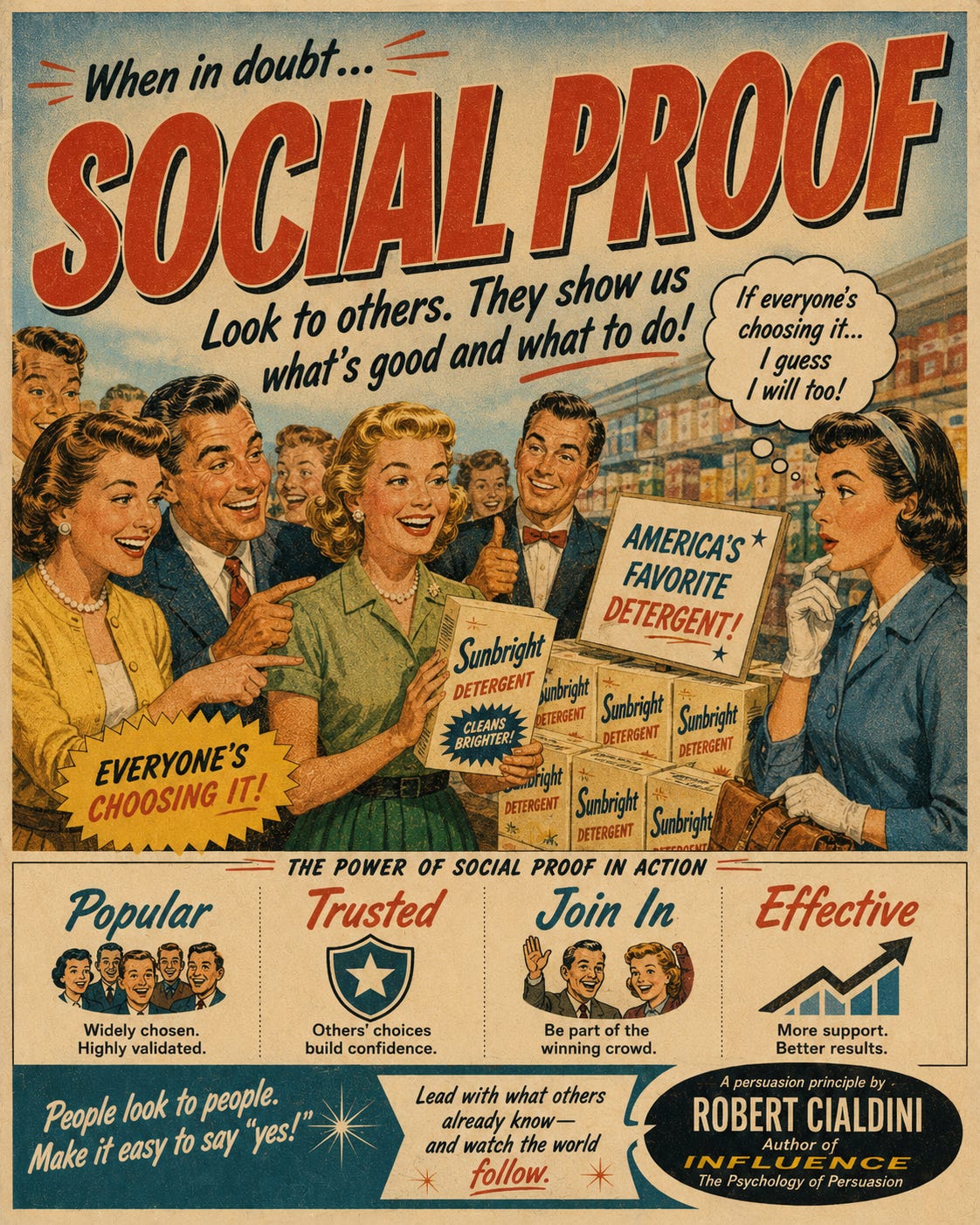
That chart was a brilliant application of a concept called social proof — and it worked. The technology, later acquired by Oracle, was built by a startup called OPower. That single, unassuming comparison chart drove an 18% reduction in consumer energy costs.
Social proof is one of the fundamental pillars of human persuasion, first identified by Robert Cialdini at Arizona State University. In the early 2000s, Cialdini ran field tests in Southern California proving that social proof could move people to use less electricity.
With Cialdini’s guidance, OPower began to quietly reshape the electricity usage of millions of households around the world. And if social proof could change energy usage with one simple chart…what else could it do?
For more than five decades, Cialdini has operated from a single conviction: that a researcher funded by public money owes the public something in return. Not abstractions. Not academic credit. Real, usable, field-tested evidence of how human beings actually work.
That commitment has produced more than 200 published papers, multiple books translated into dozens of languages, and a career spent building bridges across disciplines that rarely talk to each other. He has launched businesses, endowed awards, and cultivated long friendships with colleagues across fields..
Through all of it, one through-line: the fundamental requirement to do work that matters.
Bob sat down with us for ten hours and shared stories we’d never heard before. He shared admirable anecdotes about his mentors, his approach to research, the discipline of full-cycle psychology, how he detects large psychological effects hiding in plain sight, and his deep reverence for fieldwork as the ultimate truth-teller.
This is that conversation.
We hope you join us for all three episodes.
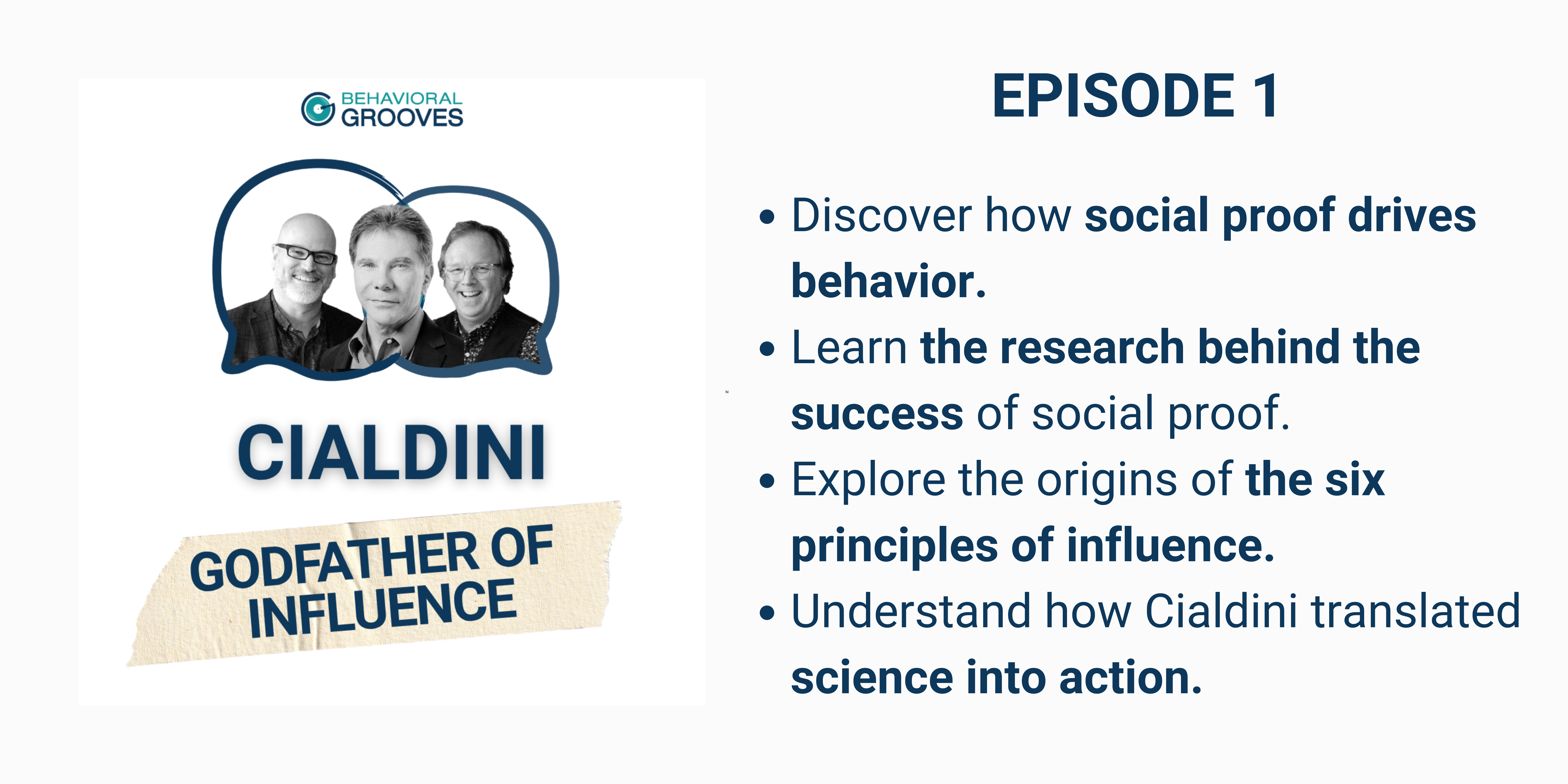
GODFATHER OF INFLUENCE: THE SERIES
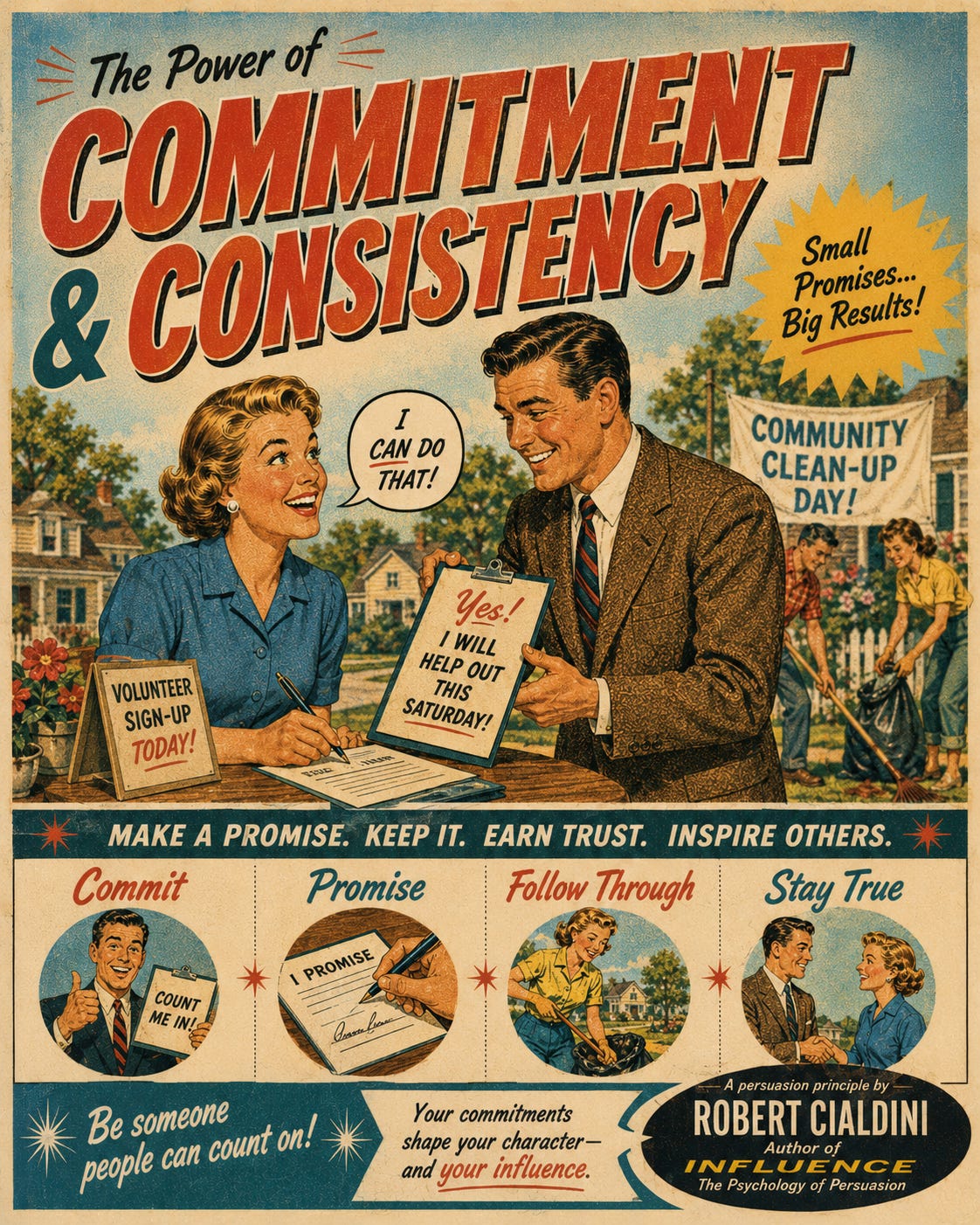
Episode 1 opens with the development of OPower and the Door Hanger study: a vivid demonstration of social proof in action. From there, we explore how Bob translated his mentors’ lessons into his own research model: identifying large effects, studying opposites, and paying attention to people behaving in ways that seem out of character. The episode closes with the writing and publishing of Influence. Featured principles: Social Proof and Commitment & Consistency.
Episode 2 gets personal. We talk about baseball, how a chance romance led Bob toward psychology, the Influence years and how the book became a reality for two disparate audiences, and what made the book resonate so deeply with researchers and practitioners alike. Featured principles: Reciprocity and Unity.
Episode 3 looks at the ripple effects of OPower on the broader business world, then turns to full-cycle psychology, then some pro-social applications of Bob’s work. The series closes with warm reflections from guests on Bob’s legacy and what makes him such a singular figure in his field. Featured principles: Scarcity, Authority, and Liking.
Social Proof
Ever notice how you’re more likely to try a busy restaurant than an empty one? That’s social proof at work. We tend to follow the crowd, especially when we’re unsure what to do next. Looking to other people’s behavior is an easy and often useful shortcut for making our own decisions.
This mental shortcut helps us make quick decisions in everyday situations, but it can also shape our behavior in surprising ways. From choosing a vacuum with 2,000 five-star reviews to conserving energy after seeing how your electricity use compares to your neighbors’, social proof quietly influences countless decisions we make every day.
The Elevator Experiment
Who knew Candid Camera could teach us about behavioral science? In this classic clip, unsuspecting elevator riders demonstrate the power of social proof as they instinctively follow the crowd, even turning to face the back of the elevator simply because everyone else does. Check it out below.
Housekeeping
Subscribe to Behavioral Grooves on YouTube
If you want to know more about today’s guest or this week’s grooving, check out the links below!
And don’t forget to join the conversation with us in our Facebook Groove Community
This has been such a great series to put time and effort into. More than 20 hours of guest interviews and nearly 10 hours of interview with Dr. Robert Cialdini: and we learned a LOT. Distilling down to three episodes was a challenge, but we hope you'll find some cool learnings in each one.
Thanks so much for this amazing episode. So wonderfully crafted and a massive privilege to hear Robert Cialdini’s own comments about his ground breaking work. Very much looking forward to the other 2 episodes in the series. Thank you!