

How to Get More Luck
The hidden rules behind chance and "randomness"
This Week’s Music for Grooving
Check out some of the recommendations from this week’s episode.
The Beatles - Lucy in the Sky with Diamonds
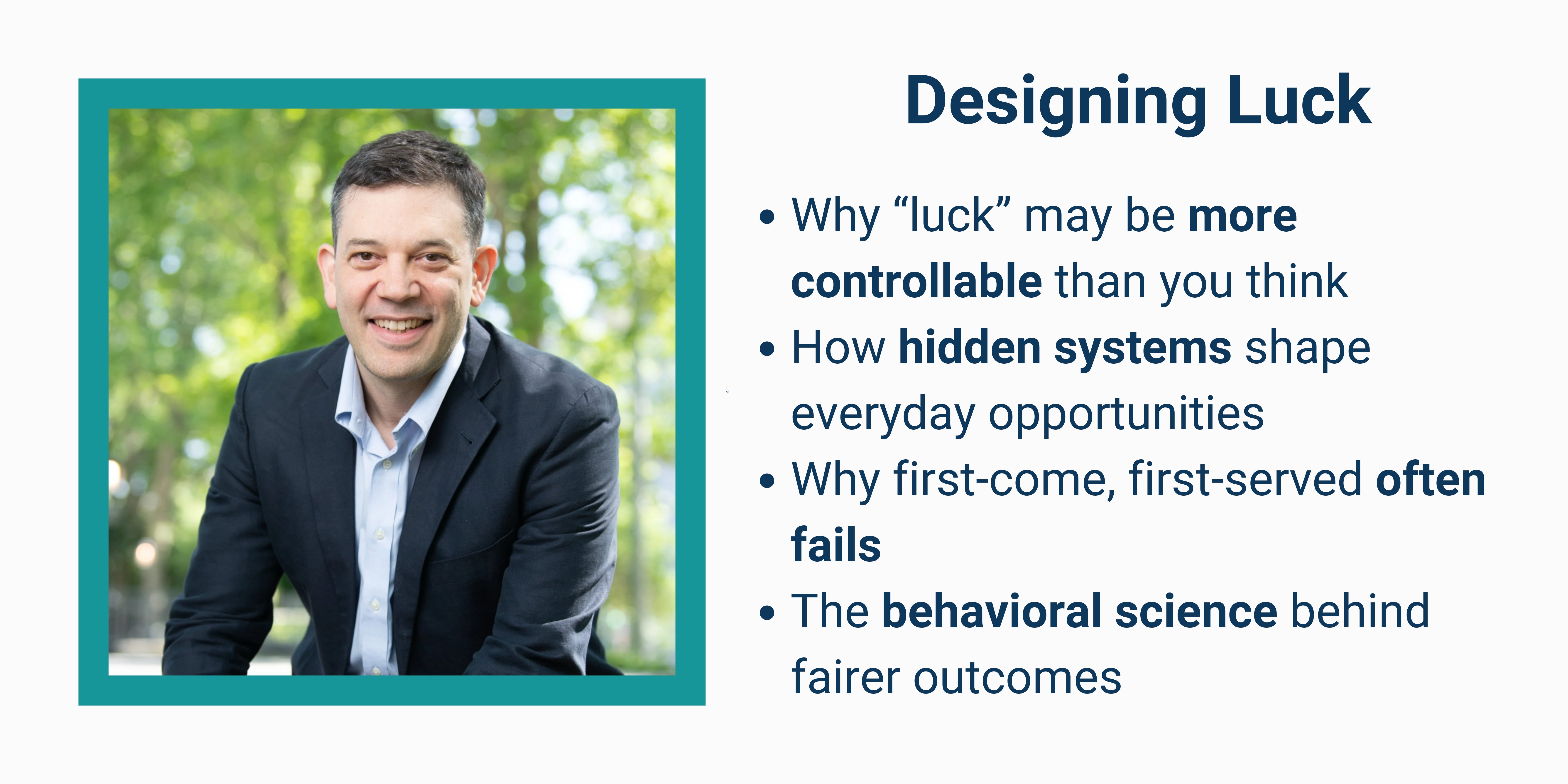
What if luck isn’t random at all?
This week, we’re chatting with author and economist Judd Kessler to investigate the invisible systems that shape who gets opportunities, access, and success. Judd opens our eyes to the “hidden markets” operating all around us that influence everything from concert tickets to organ transplants, and how understanding these systems can make you luckier than you think.
We uncover why first-come, first-served systems often fail and how behavioral economics can improve many of the systems that feel random or unfair. These insights apply to both the big and small moments in our lives. Relationships, everyday decisions, and even our careers can be shaped by reframing what luck really means and learning how these hidden systems work.
Sometimes, it’s not enough to simply work hard and play by the rules. You also have to understand the system itself, what matters within it, how decisions get made, and how to navigate it effectively. If you’ve ever felt unlucky, this conversation might help you rethink chance entirely and see how luck can be influenced more than you realize.
Want to watch this episode? Check it out on our YouTube Channel
Defaulting to Default
One of the most powerful findings in behavioral science is the default effect, the idea that people tend to stick with the option that is already selected for them. Even when changing the choice is simple, most people go with the default because it feels easier, safer, or socially endorsed.
This has major real-world consequences. Countries with “opt-out” organ donor systems, where citizens are automatically considered donors unless they say otherwise, consistently report dramatically higher donor registration rates than countries using “opt-in” systems. Researchers have also found that defaults can increase retirement savings participation, influence medical decisions, and even shape what foods people choose in cafeterias.
The fascinating part? People still believe they’re making fully independent decisions, even when the structure of the choice itself strongly nudges their behavior.
Can you Cultivate Luck?
Interested in feeling luckier — or even becoming luckier? This TED Talk from Christian Busch explores how luck may be less random than we think. Busch dives into how we perceive luck, the mindset shifts that help create more opportunities, and the behaviors that can increase the chances of positive outcomes in our lives.
Housekeeping
Lucky by Design by Judd Kessler
Subscribe to Behavioral Grooves on YouTube
If you want to know more about today’s guest or this week’s grooving, check out the links below!
And don’t forget to join the conversation with us in our Facebook Groove Community